Research Portfolio

Skip to research
Baha Erim Uzunoglu

NC State University · PhD researcher

Expected graduation: December 2026

Sensing the world.
Communicating
through touch.

I build wearable electronics that connect environmental sensing, haptic feedback, and physical interaction.

I’m Baha Erim Uzunoglu, a researcher in the Bandodkar Research Group at North Carolina State University.

Open to opportunities

I am exploring opportunities in wearable-device hardware development, postdoctoral research, and research scientist roles in industry. I welcome conversations about related engineering and research positions where I can contribute my background in electronics, sensing, and biointerfaces.

Let’s discuss opportunities ↗
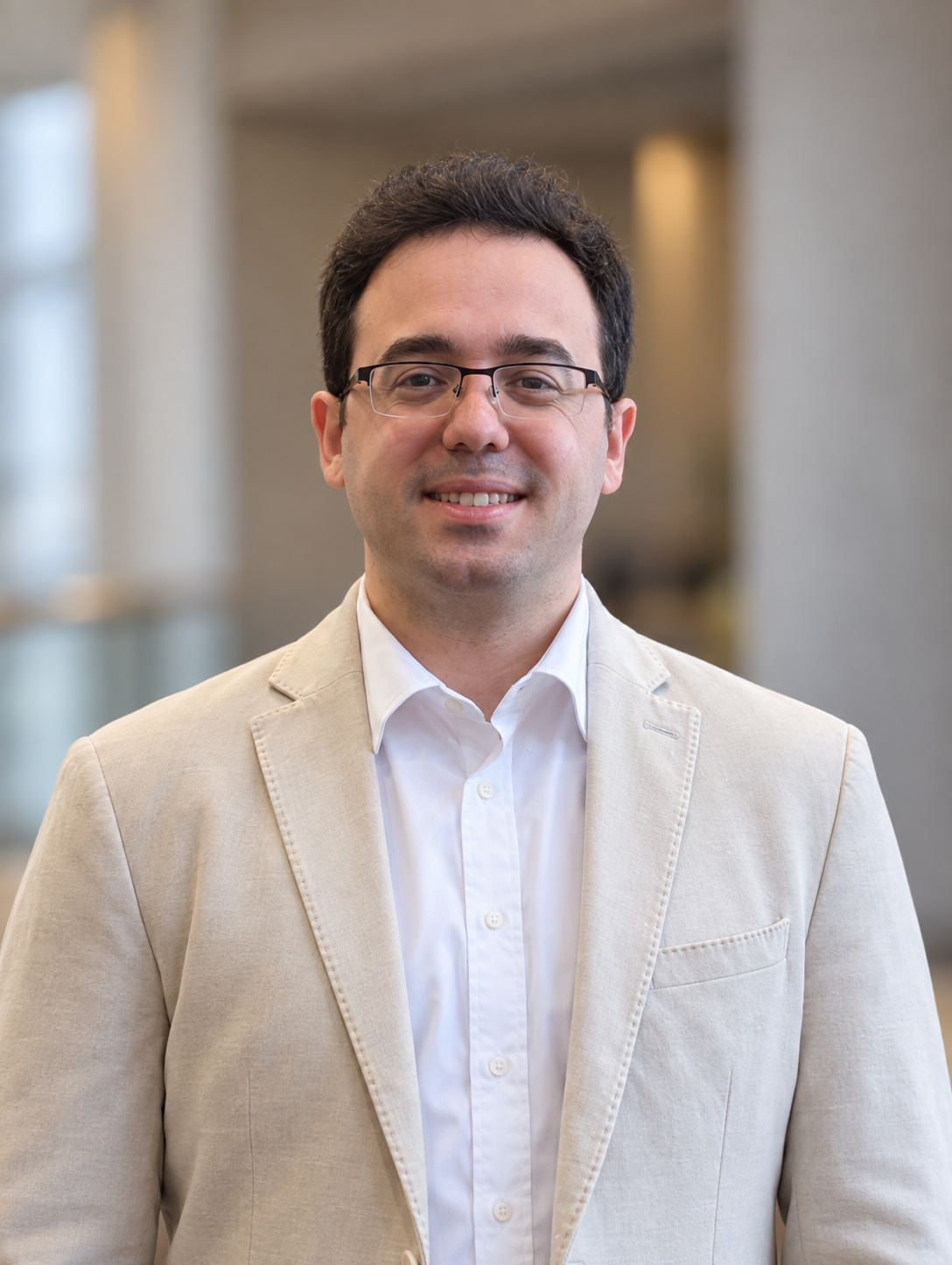
Portrait of Baha Erim Uzunoglu wearing a beige jacket and white shirt

01 / Featured research

Wearable systems · Haptics
First author · Device, 2026

From chemical signals
to tactile information.

Environmental hazards are often invisible. Our wearable platform combines gas, particulate, and aqueous chemical sensing with six target-specific vibration patterns to communicate sensor information through touch.

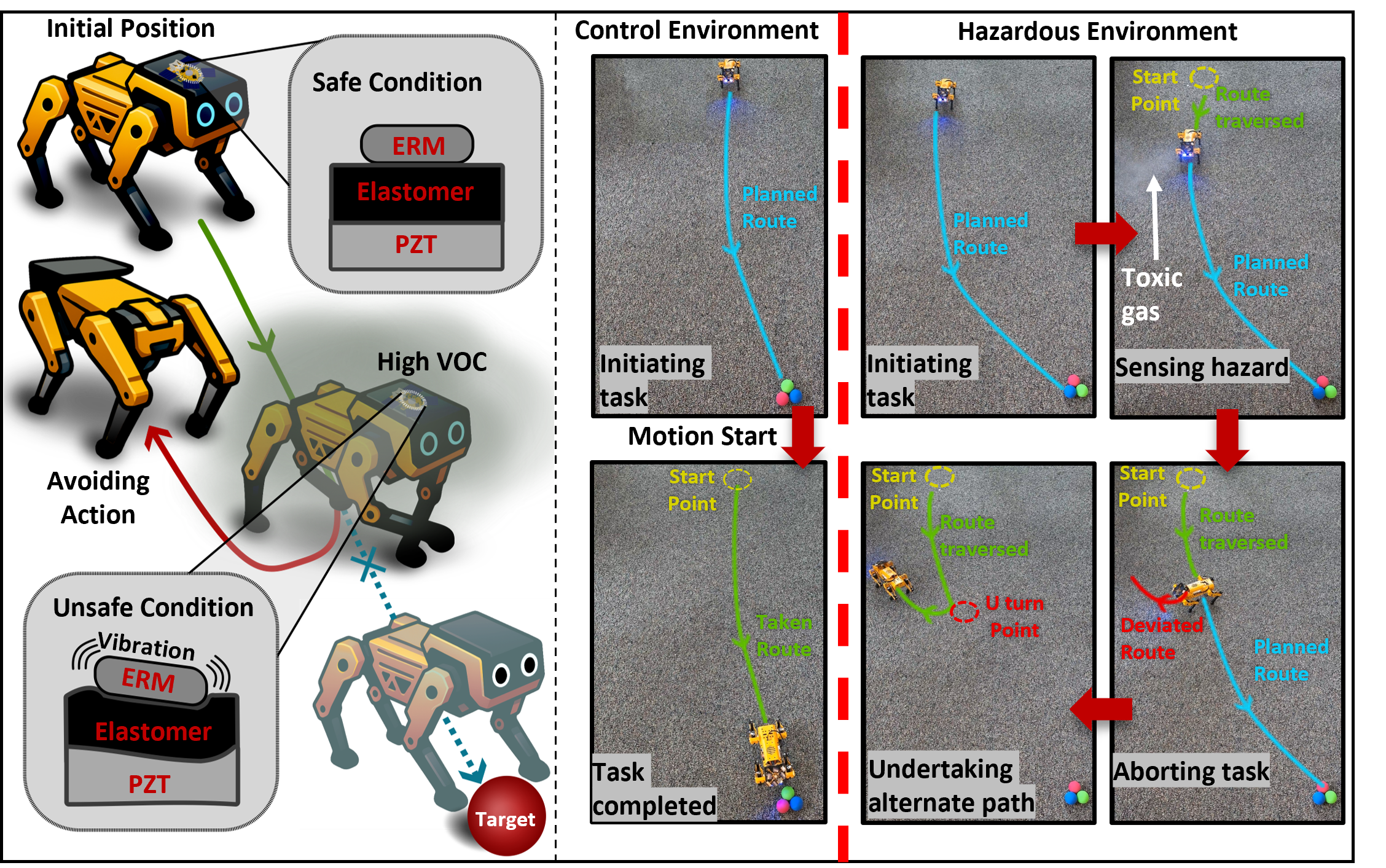
A complementary PVDF electronic-skin receiver decodes vibration patterns, extending the communication approach to robotic responses.

Read the publication ↗

What I contributed

I independently conceptualized and developed the wearable platform and the electronic-skin receiver. My work included custom electronics, embedded firmware, actuator–skin interface characterization, and conformal housings made with 3D printing and Ecoflex.

Wearable patch on the arm with distinct vibration patterns representing environmental signals and a diagram of skin sensory pathways
From sensing to touch. The device encodes sensor threshold-crossing events into distinct vibration patterns for haptic communication at the skin.
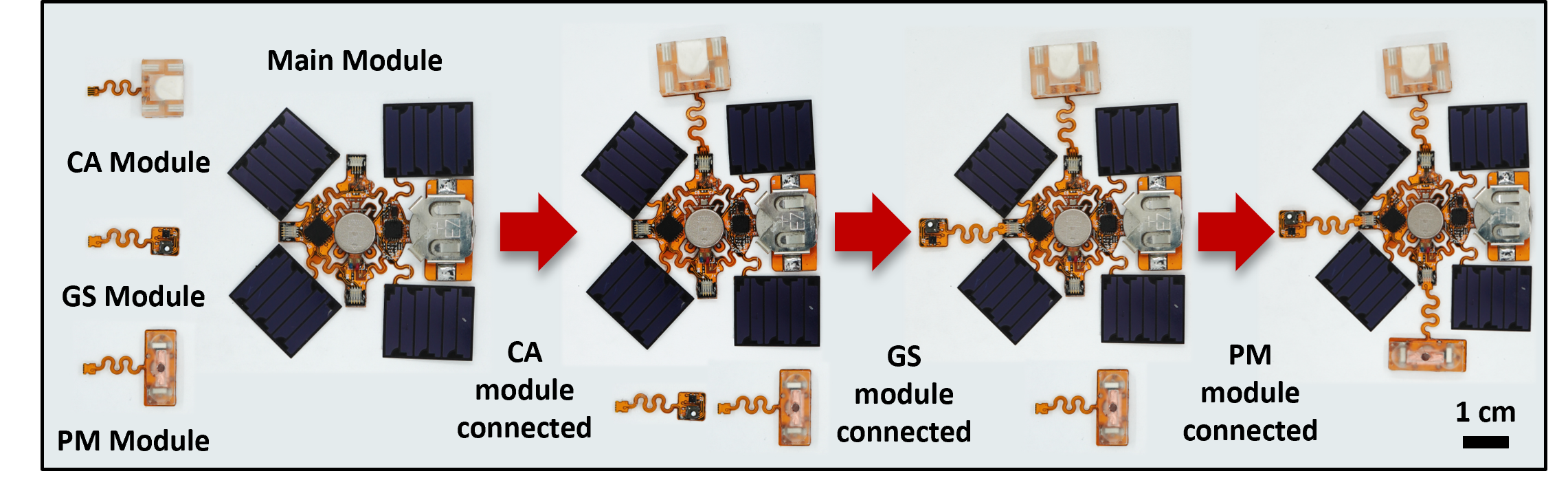
Sequence showing CA, GS, and PM sensing modules connecting to the wearable main module
Modular hardware. Swappable sensing modules connect to the main electronics platform. Select any figure to view it at full size.
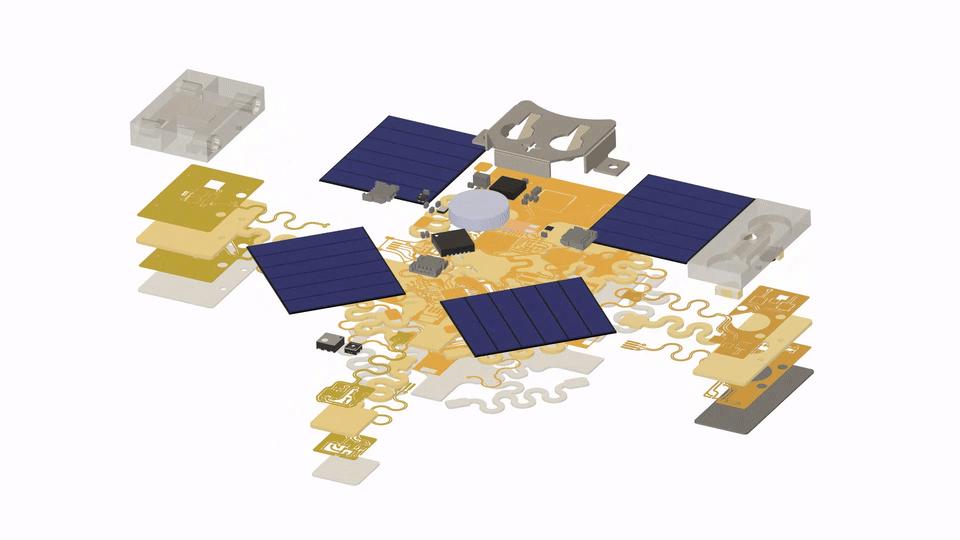
Exploded-view animation · click to open or closeExploded view of the wearable showing separated electronics, solar panels, sensing modules, and housingsAnimated exploded view of wearable components separating and reassembling
Inside the wearable. Forward-and-reverse animation of the assembly. Open to play the GIF; close to return to the still image.
Robot sensing diagram and experimental routes comparing safe travel with a change in direction after detecting a gas hazard
Extending tactile communication to robots. The diagram links vibration sensing to a robot’s response, alongside example routes with and without a detected hazard.

Wearable and robot demonstrations

01Wearable interface on the arm

Close-up of the conformal wearable and its vibration actuators on the forearm. (0:15)

02Water sampling in the field

Outdoor demonstration showing removal of the disposable sensing component and water sampling. (0:36)

03Robot response to elevated VOC levels

Robot behavior under non-hazardous and hazardous conditions, showing its response to elevated volatile organic compound (VOC) levels. (0:57)

04Robot response to multiple elevated hazard levels

Overhead demonstration of the robot changing its route in response to multiple elevated hazard levels. (1:40)

02 / MEMS gyroscope research

Bilkent University · 2019–2022
Advisor: Professor Erdinc Tatar
JMEMS, 2022

Measuring on-chip stress.
Compensating long-term drift.

A gyroscope can report a changing rotation rate even when it is stationary. Temperature calibration helps, but mechanical stress also changes the sensor’s response. My master’s research investigated measuring that stress directly on the chip to compensate drift.

We integrated 16 capacitive stress sensors with a 3.2 mm vibrating ring gyroscope. The compact bridge-type sensors track mechanical stress with low temperature sensitivity, providing additional information for calibration.

A Ring Gyroscope With On-Chip Capacitive Stress Compensation ↗
3.2 mmRing diameter
16Integrated stress sensors
0.008°/hMismatched-mode stability
0.003°/hMatched-mode stability

Published stress-compensated output stability at two-day averaging, following 16-day mismatched-mode and eight-day matched-mode tests at room temperature. These values describe long-term stability under the reported conditions, not short-term bias instability.

My role and the experimental approach

I designed and tested the integrated gyroscope and stress-sensing platform, and evaluated its long-term output. The study combined controlled stress experiments, gyroscope characterization, and partial least-squares compensation. The resulting paper lists me as first and corresponding author.

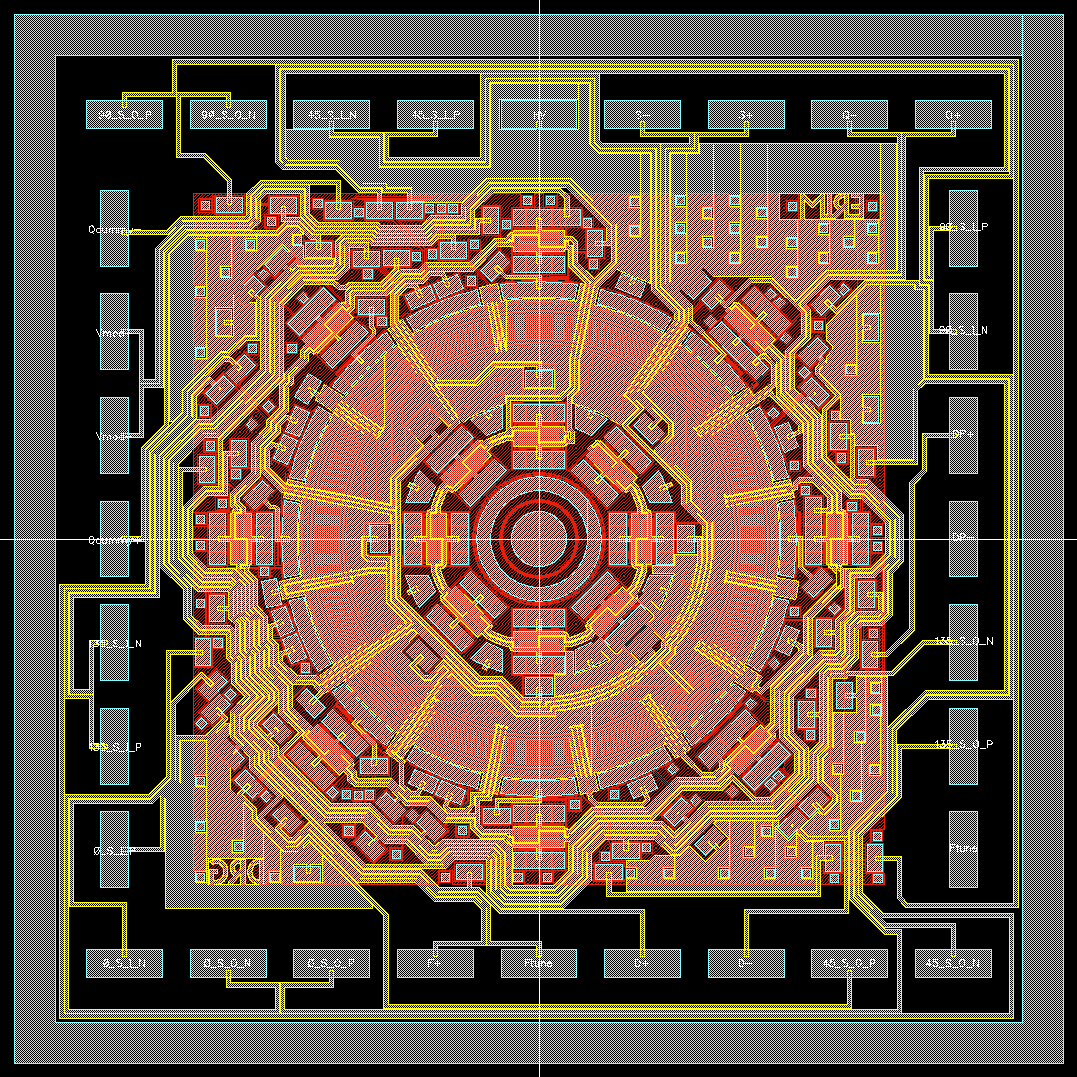
Circular MEMS gyroscope layout with concentric structures, electrodes, and electrical routing
Device layout. Circular MEMS gyroscope design and electrode routing from my gyroscope research.
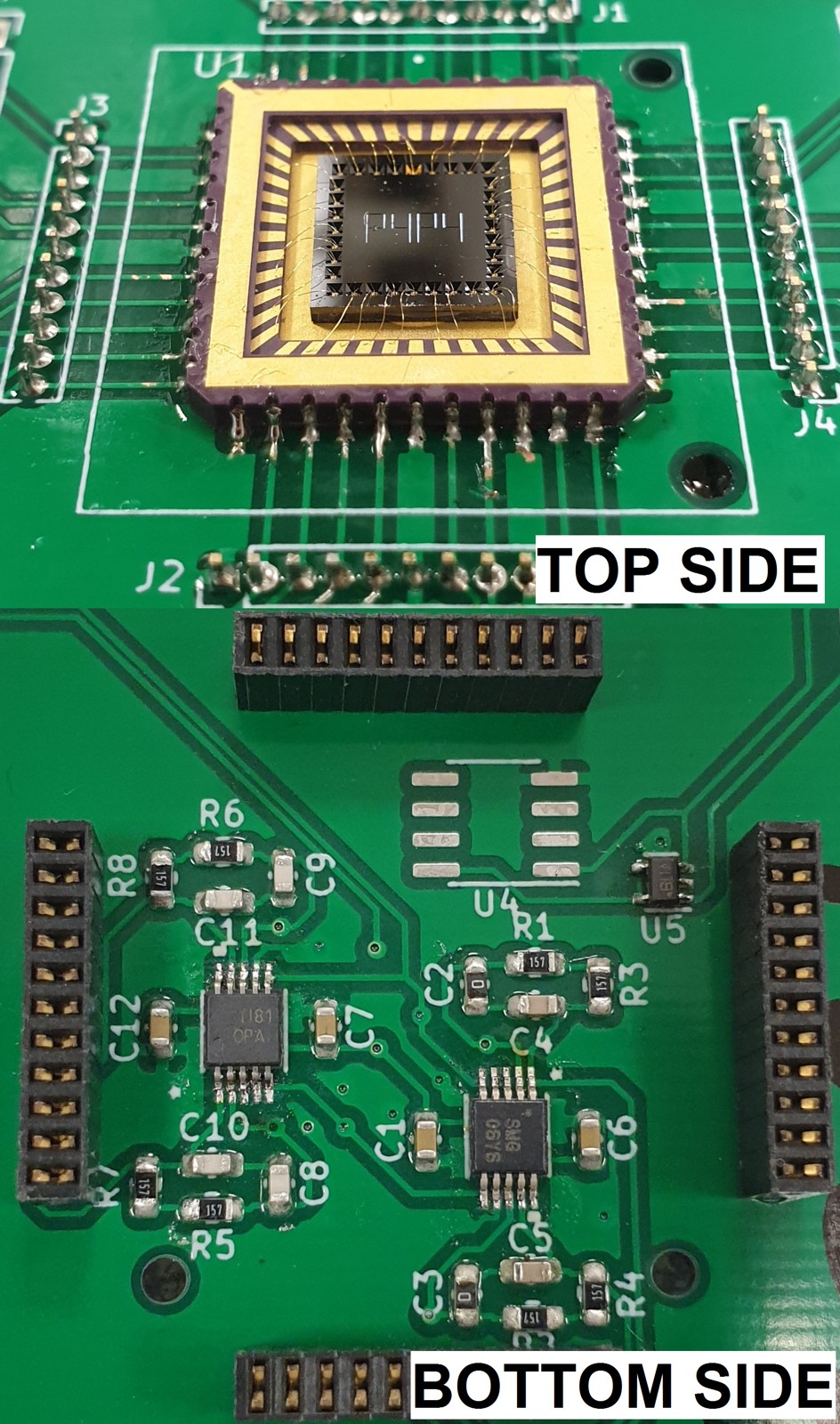
Top and bottom views of a wire-bonded MEMS device mounted on its circuit board
Device and electronics. Packaged sensor, wire bonds, and circuit-board components. Select an image to inspect it at full size.
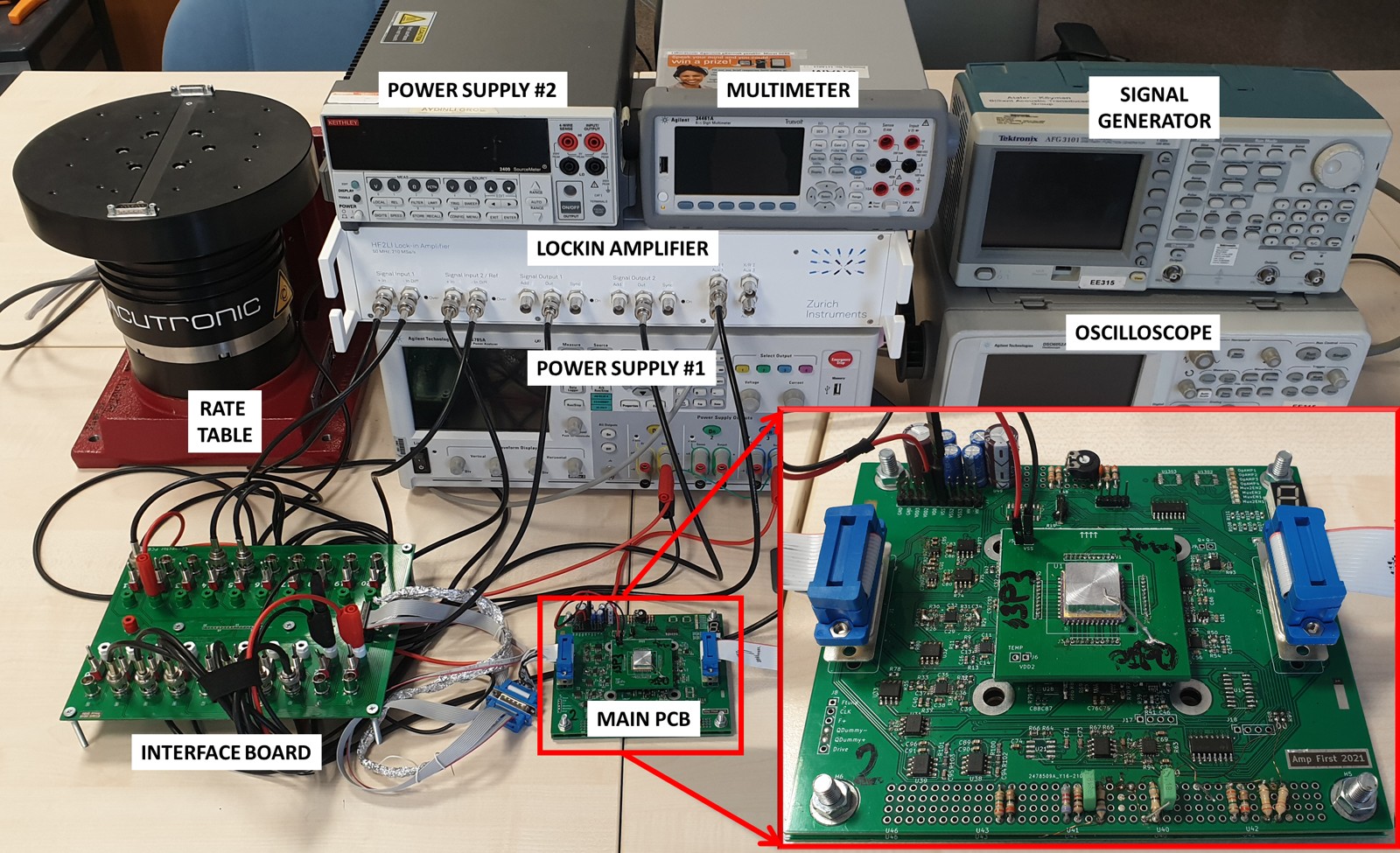
Gyroscope characterization setup showing a rate table, lock-in amplifier, power supplies, oscilloscope, and interface boards
Characterization setup. Rate table, readout electronics, and laboratory instrumentation for measuring the gyroscope response.
Metal stress testbed with labeled X, Y, and diagonal loading points surrounding the sensor board
Stress testbed. Fixture for applying mechanical loading and studying the stress-sensor response.

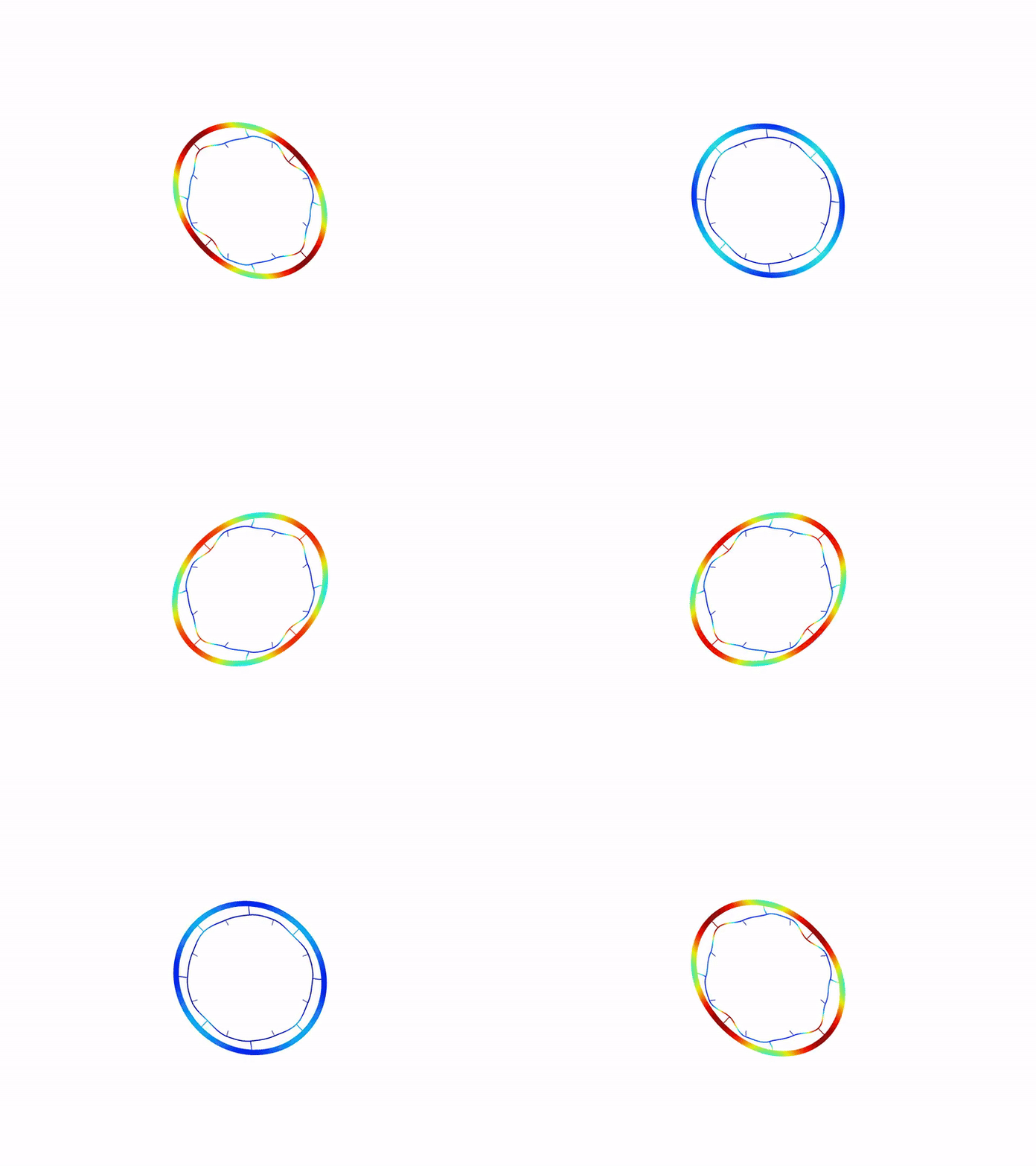
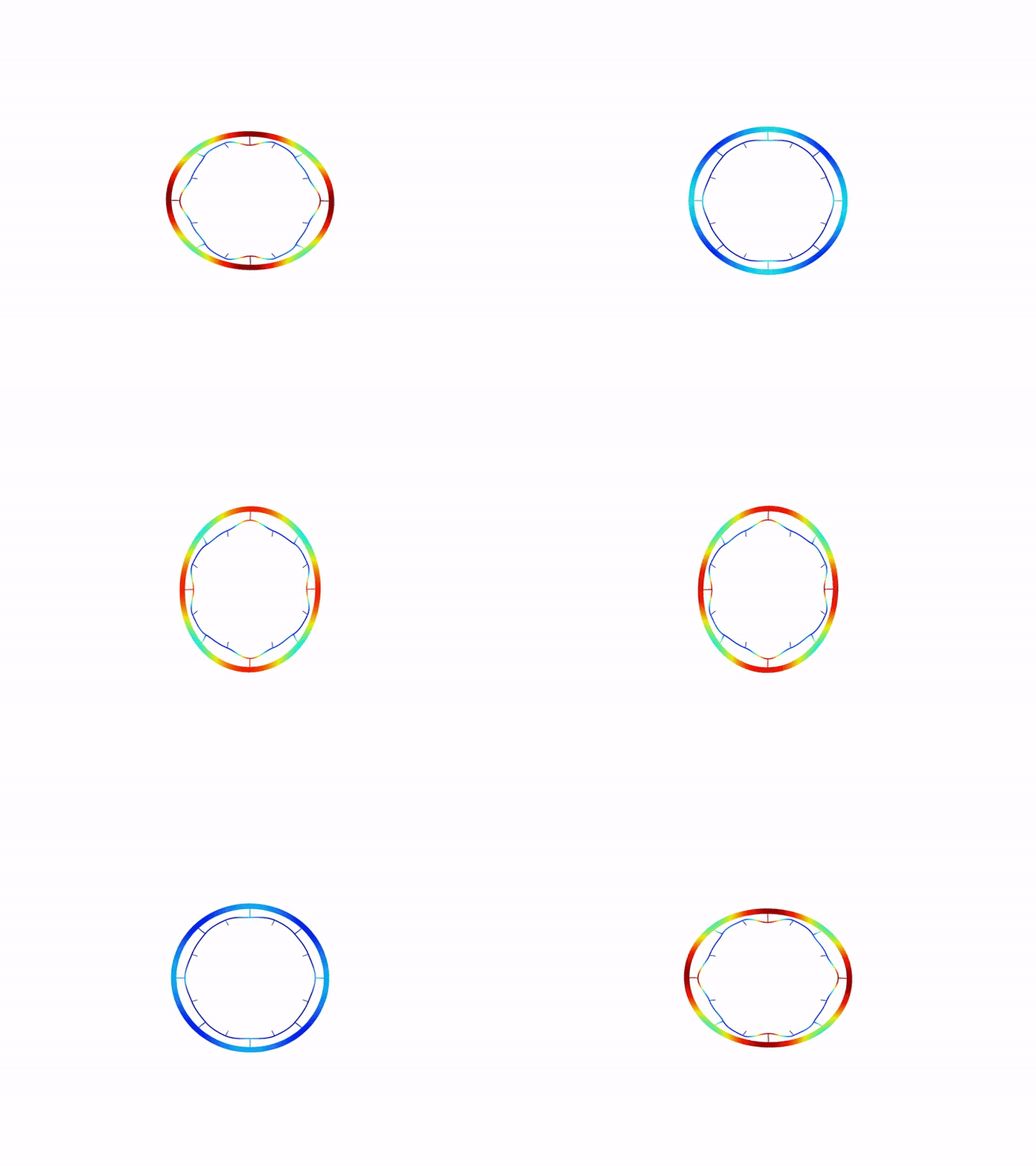
Vibrating ring: sensing and drive modes

These animations illustrate the sensing and drive vibration modes of the ring gyroscope. They are visualizations rather than recorded device measurements.

Sensing mode of the vibrating ring gyroscope
Sensing mode
Drive mode of the vibrating ring gyroscope
Drive mode

03 / More research

Engineering the interface.
From circuits to microsystems.

Bioelectronics · npj Biosensing, 2026

Electronics for neural recording

Carbon nanotube microelectrode arrays provide an interface for cerebral-organoid electrophysiology. In this collaborative project, I contributed PCB design and benchtop electrical simulation experiments.

Read the publication ↗

04 / Research groups

Research built together.

My work connects two research environments: bioelectronics and wearable systems at NC State, and precision MEMS sensing at Bilkent.

PhD research · August 2022–present

Bandodkar Research Group

North Carolina State University
Advisor: Professor Amay J. Bandodkar

The group develops biochemical sensors and energy devices at the intersection of electronics, chemistry, materials science, and biology. My work contributes wearable sensing, haptic communication, custom electronics, and neural recording instrumentation.

Visit the research group ↗

Master’s research · July 2019–July 2022

Bilkent MEMS Research Group

Bilkent University
Advisor: Professor Erdinc Tatar

The group studies MEMS design, microfabrication, readout circuits, modeling, control, and sensor calibration. My master’s work focused on ring gyroscopes and on-chip capacitive stress sensing for drift compensation.

Visit the research group ↗
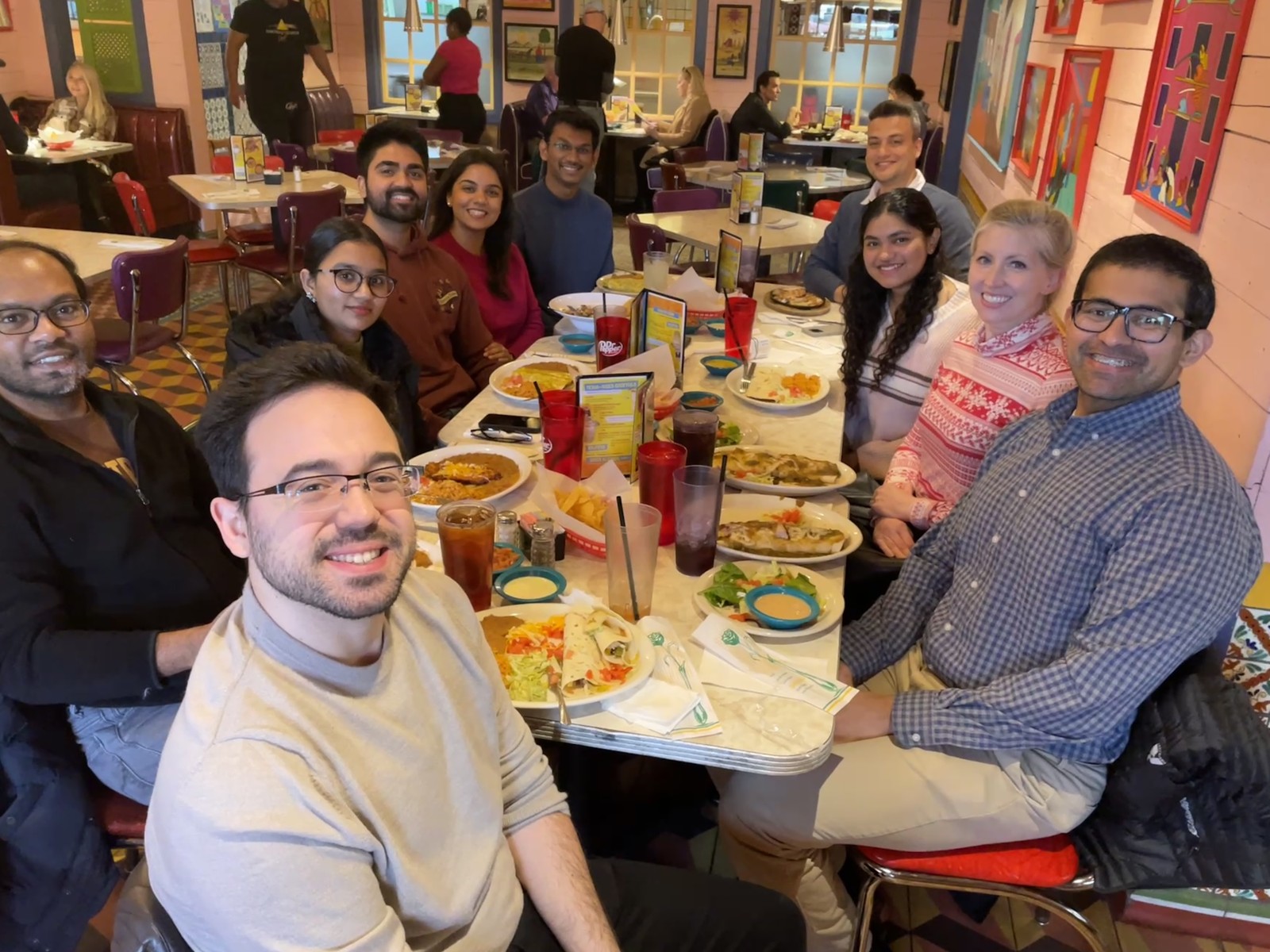
Research group members gathered around a restaurant table
A research group gathering — the people behind the collaborative work.

05 / About me

Hands-on engineering.
Interdisciplinary research.

I develop research hardware from circuit design through embedded implementation and experimental validation. My work spans wearable sensing, haptic communication, and neural recording instrumentation.

I have collaborated with veterinarians, physicists, biologists, chemists, and medical doctors, including on studies of water-powered wound dressings and moisture-activated batteries.

PhD, NC State University · Expected December 2026
MS, Bilkent University · 2022
BS, Bogazici University · 2019

Tools and methods

Rigid & flexible PCBsAnalog front endsEmbedded C/C++Python signal analysisWearable sensorsHaptic interfacesMEMSPrototype fabrication

My practical experience includes low-noise readout circuits, microcontroller firmware, sensor calibration, EMG detection, and device characterization.

View my publication record ↗
06 / Media coverage

Research in the news.

Selected coverage of our wearable sensing and haptic communication research.